Email Marketing Still Beats Everything: How to Build a List That Actually Sells
Email returns $36-$42 per dollar spent in 2026. Learn how to build a list, set up automated flows, and turn subscribers into buyers. Start with these 5 flows.
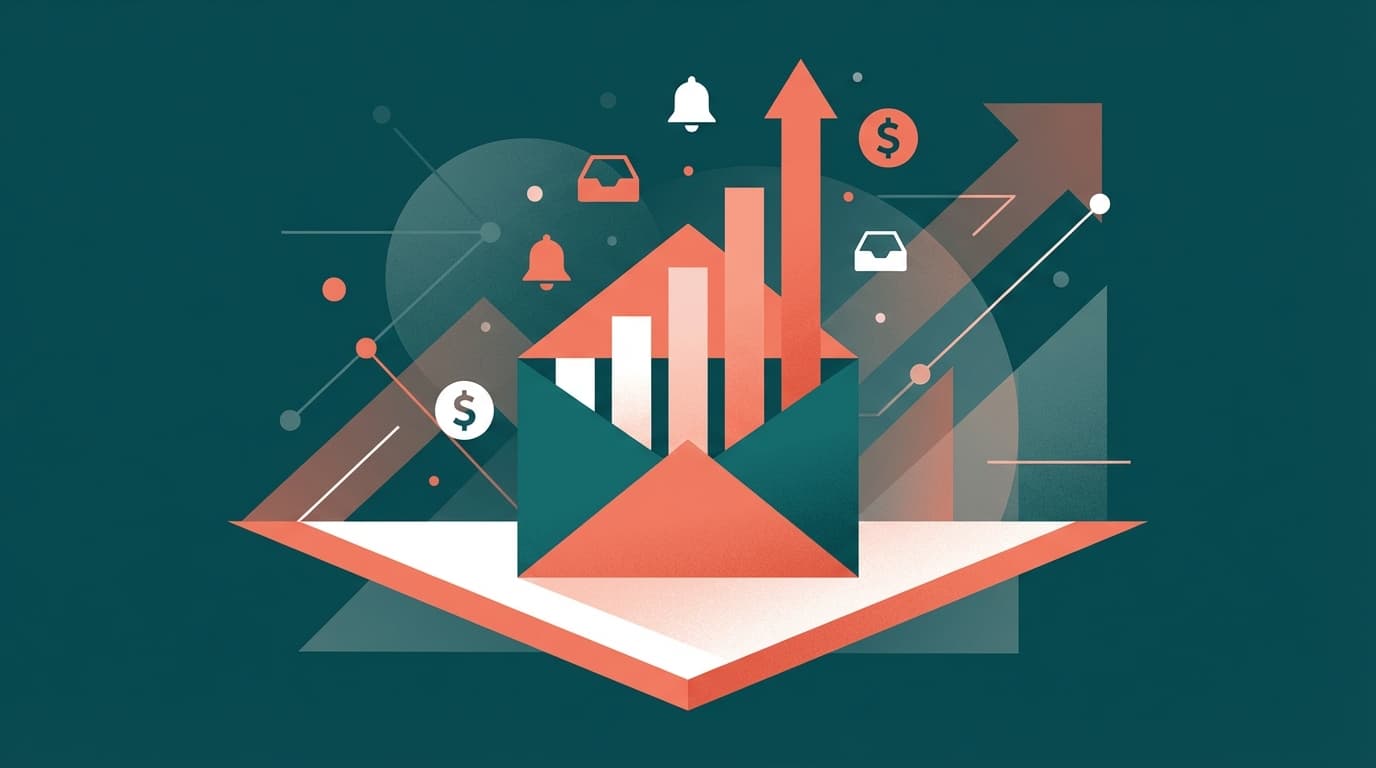
Every year, someone declares email marketing dead. And every year, the data says the exact opposite. In 2026, email returns between $36 and $42 for every dollar spent, and 28% of marketing professionals rank it as their single highest-ROI channel, ahead of SEO, paid social, and every shiny new platform fighting for your attention.
Here's what makes that number even more interesting: it's not big brands propping up that average. 53% of small business owners across the U.S., Canada, the U.K., and Australia say email is their most effective strategy for both finding new customers and keeping existing ones. If you're running a business doing $500K to $10M in revenue and you're not treating your email list like a revenue engine, you're leaving real money sitting on the table.
We've seen this play out with dozens of clients. The ones who invest in a proper email system consistently outperform the ones pouring budget into paid ads alone. Not because ads don't work, but because email compounds. Every subscriber you add today is someone you can sell to next month, next quarter, and next year without paying another dollar to reach them.
Your Email List Is the Only Audience You Actually Own
Think about every other marketing channel you use. Instagram can throttle your reach tomorrow. Google can change its algorithm overnight (and just did with the March 2026 core update). TikTok's future in North America is a coin flip on any given Tuesday. Paid ads stop working the second you stop paying.
Your email list is different. It's yours. No algorithm sits between you and your subscriber. No platform takes a cut or decides who sees your message. When you hit send, your email lands in their inbox, and what happens next depends entirely on how good your content is.
That's not a small distinction. It's the entire reason email continues to beat everything else year after year. You're building an asset, not renting an audience.
Why Most Small Businesses Get Email Wrong
The typical small business approach to email goes something like this: collect emails through a basic signup form, send a monthly newsletter that recaps what the company has been up to, wonder why nobody opens it, and eventually stop sending altogether.
The problem isn't email. The problem is treating your list like a megaphone instead of a conversation.
81% of consumers say they want personalized interactions from brands. Not "Hi [First Name]" personalization, but actual relevance. Emails that reflect what they've browsed, what they've bought, and what they care about. When you deliver that, the results speak for themselves: segmented emails generate 30% more opens and 50% more clickthroughs than generic blasts. Personalized emails drive 6x higher transaction rates. And marketers who use advanced segmentation report a 760% increase in email revenue.
Those aren't marginal improvements. That's the difference between email being a cost center and email being your most profitable channel.
Building a List That's Worth Something
Before you can sell through email, you need subscribers who actually want to hear from you. And "more subscribers" is not the goal. A list of 2,000 engaged buyers will outperform a list of 10,000 people who signed up for a discount code and never opened another email.
Quality starts with how you acquire subscribers. Here's what's actually working right now:
Pop-ups that earn attention, not annoyance. Pop-ups remain the highest-converting list-building tool for ecommerce, converting between 2% and 5% on average, with top performers hitting 8% to 10%. The key is timing and value. A pop-up that fires the instant someone lands on your site feels desperate. A scroll-triggered pop-up that appears after someone has read half your page, or an exit-intent pop-up that catches them on the way out, feels like a natural offer. Deploy different formats at different points in the visitor journey rather than relying on a single pop-up.
Lead magnets that aren't boring PDFs. Static guides and ebooks still work, but interactive lead magnets like quizzes, assessments, and calculators now convert 70% better. If you sell skincare, a "find your routine" quiz outperforms a "10 skincare tips" PDF every time. The quiz feels useful. The PDF feels like homework.
Checkout opt-ins. This one is criminally underused. Every ecommerce platform already collects emails for order confirmation. Adding an explicit opt-in checkbox at checkout captures buyers at the exact moment they trust you most, right after they've handed you their credit card.
Social media as a funnel, not a destination. Brands running "email-only drops" through Instagram see conversion rates above 20% on signup pages. The trick is making your email list feel exclusive. If your best content, best deals, or earliest access lives in the inbox, people will trade their email to get there.
The Five Flows That Print Money
Once you have subscribers, the magic happens through automated email flows. These are sequences that trigger based on what someone does (or doesn't do), running 24/7 without you touching them. Behavior-based emails generate roughly 3x higher engagement than scheduled campaigns because they arrive at exactly the right moment.
Here are the five flows every business should have running:
The Welcome Sequence. This is your first impression, and most businesses waste it with a single "thanks for subscribing" email. Build a 3 to 4 email sequence over the first week. Email one delivers whatever you promised (discount code, guide, quiz results). Email two tells your brand story and what makes you different. Email three showcases your best-selling products or most popular services with social proof. Email four makes a direct offer with a deadline. We've seen welcome sequences account for 15% to 20% of total email revenue for ecommerce clients.
The Abandoned Cart Flow. 70% of online shopping carts get abandoned. That's not a problem, it's an opportunity. These people already picked your product. They already started checkout. Something interrupted them, and a well-timed email brings them back. Send the first email within one hour with a clean reminder of what they left behind, including the product image, price, and a one-click return to checkout. Follow up 24 hours later with a reason to buy now, whether that's social proof, a limited-stock nudge, or a small incentive. High-performing abandoned cart flows generate double-digit conversion rates.
The Post-Purchase Sequence. The sale isn't the finish line. It's the starting point for your next sale. A post-purchase flow builds loyalty by confirming the order, setting delivery expectations, asking for feedback after arrival, and eventually cross-selling or upselling related products. This is where you turn a one-time buyer into a repeat customer, and repeat customers spend 67% more on average than new ones.
The Win-Back Flow. Subscribers go quiet. It happens. A win-back flow targets people who haven't opened or clicked in 60 to 90 days with a re-engagement campaign. Be direct: "We noticed you've been quiet. Here's what you've missed." Give them a compelling reason to come back, or let them go. A clean, engaged list performs better than a bloated, inactive one, and it keeps your sender reputation healthy.
The Browse Abandonment Flow. Someone visited your product page three times this week but never added to cart. That's intent. A browse abandonment email that says "Still thinking about [product]?" with a review or testimonial can be the nudge they need. It's less aggressive than cart abandonment because there's no cart to recover, but the conversion rates are surprisingly strong for how simple these emails are to set up.
Segmentation Is Where the Real Money Lives
Sending the same email to your entire list is like running the same ad to every person on the internet. It works a little, but it wastes a lot.
Start with these four segments and you'll outperform 90% of small businesses:
Purchase history. Someone who bought running shoes doesn't need an email about running shoes. They need an email about running socks, insoles, or a training plan that happens to feature your new gear. Segment by what people have bought and recommend what comes next.
Engagement level. Your most engaged subscribers (people who open and click consistently) deserve different treatment than someone who hasn't opened in three months. Send your best offers and earliest access to the engaged group. They've earned it, and they'll convert at much higher rates.
Acquisition source. Someone who signed up through a quiz has different expectations than someone who opted in at checkout. The quiz subscriber wants education and personalization. The checkout subscriber already bought and wants to know about new products. Match your messaging to how they found you.
Lifecycle stage. A first-time buyer needs onboarding and trust-building. A five-time buyer needs loyalty rewards and VIP treatment. A lapsed customer needs a win-back nudge. Treating these groups identically means you're either boring your best customers or overwhelming your newest ones.
Mobile or Nothing
41% of all email views happen on mobile, and that number jumps to 75% for Gmail users. If your emails aren't designed for a phone screen first, you're losing almost half your audience before they read a word. The same principle applies to your website's conversion design.
This means single-column layouts, buttons big enough to tap with a thumb, subject lines under 40 characters that don't get cut off, and preheader text that adds context instead of repeating the subject line. Test every email on your phone before you send it. If you have to pinch and zoom, start over.
Stop Guessing, Start Measuring
The beauty of email is that everything is measurable. But most businesses track the wrong things. Open rates are useful as a trend indicator, but they're increasingly unreliable thanks to Apple's Mail Privacy Protection inflating the numbers.
Focus on these instead:
Click-through rate. This tells you whether your content is compelling enough to drive action. Benchmark: 2% to 5% for most industries.
Revenue per email. Total revenue attributed to email divided by the number of emails sent. This is the metric that matters most because it connects directly to your bottom line.
List growth rate. New subscribers minus unsubscribes, divided by total list size. If this number is negative, your acquisition strategy needs work.
Unsubscribe rate. A small unsubscribe rate (under 0.5%) is healthy. It means you're reaching the right people. If it spikes after a particular email, that's feedback. Listen to it.
Your Next Move
If you don't have email automation set up, start with the welcome sequence and abandoned cart flow. Those two alone will generate measurable revenue within the first month. Use Klaviyo if you're on Shopify, Mailchimp or ActiveCampaign if you're not. Set up one flow per week, and within a month you'll have a system that sells while you sleep.
If you already have the basics running, the next step is segmentation. Pull your purchase data, create your first four segments, and send one targeted campaign to each. Compare the results against your last generic blast. The difference will convince you to never send an unsegmented email again.
And if you want this built for you, with the strategy, the copy, and the automation done right, that's exactly what we do at GrowthBoss. We build email systems that compound, so your best marketing channel actually performs like one.