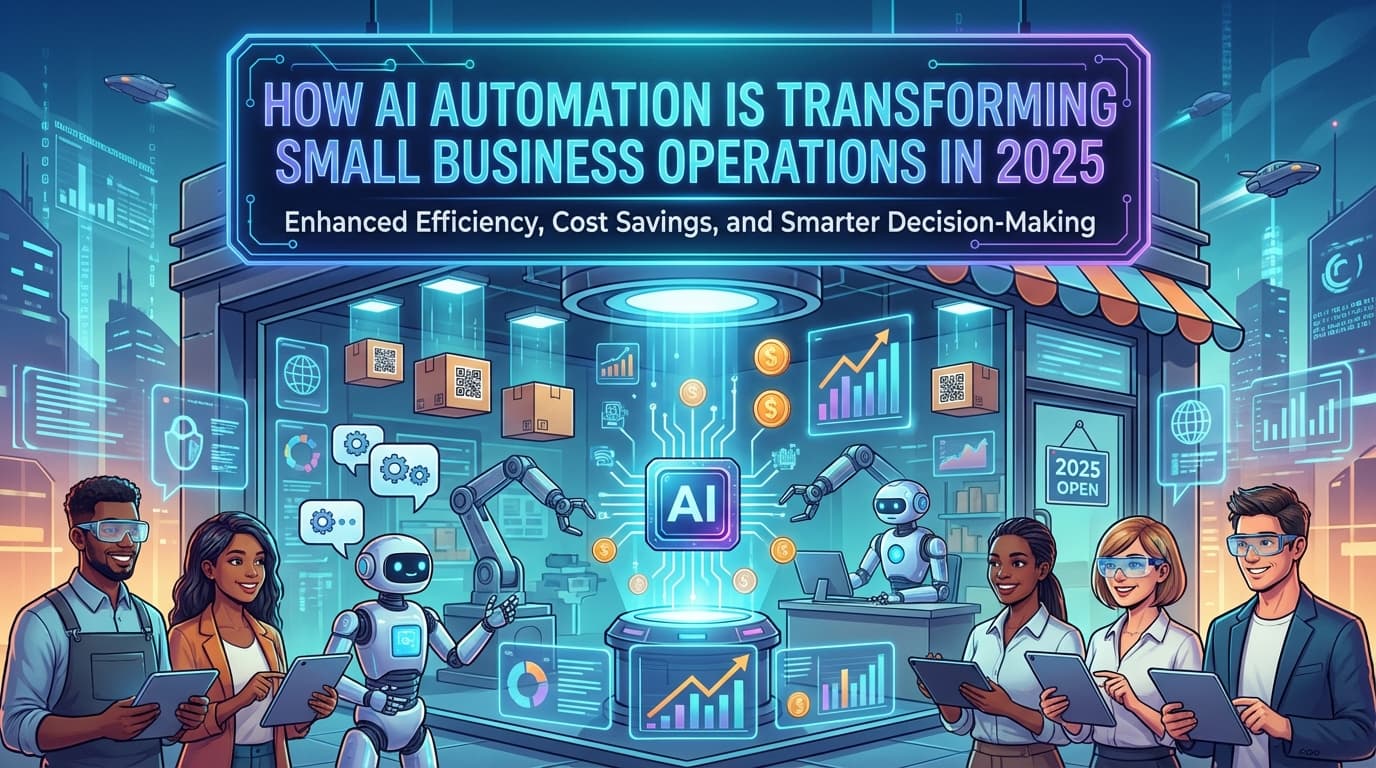
How AI Automation Is Transforming Small Business Operations in 2025
Discover how AI automation is revolutionizing small business operations in 2025 with enhanced efficiency, cost savings, and smarter decision-making.
Introduction
In 2025, the landscape of small business operations is undergoing a significant transformation thanks to the rise of AI automation. Small businesses, once limited by resources and manpower, are now leveraging artificial intelligence and business-process automation to streamline processes, reduce costs, and improve customer experiences. Understanding how AI automation is transforming small business operations in 2025 is essential for entrepreneurs and managers looking to stay competitive in a rapidly evolving market. With the right tools and strategies, small businesses can harness the power of AI to not only survive but thrive in this new era.
Enhancing Efficiency Through AI Automation
One of the most impactful ways AI automation is changing small business operations is by boosting efficiency. Routine tasks such as inventory management, scheduling, and customer service are increasingly handled by AI-powered tools. For example, chatbots like Drift and Intercom can manage customer inquiries 24/7, freeing up staff to focus on more complex tasks that require human insight. Automated inventory systems, such as those offered by TradeGecko, track stock levels in real-time, reducing errors and preventing overstock or shortages, which can be detrimental to cash flow.
Moreover, AI-driven analytics platforms like Tableau help small businesses optimize their workflows by identifying bottlenecks and suggesting improvements. This level of automation not only saves time but also reduces human error, allowing small businesses to operate more smoothly and with greater accuracy. Business owners can implement these tools immediately by signing up for free trials or demos to see the benefits firsthand.
Cost Savings and Resource Optimization
AI automation also plays a crucial role in reducing operational costs for small businesses. By automating repetitive tasks, businesses can minimize the need for extensive manual labor, which translates into lower payroll expenses. Additionally, AI tools can optimize energy usage, supply chain logistics, and marketing campaigns, ensuring resources are used more effectively.
For instance, AI-powered marketing platforms like HubSpot analyze customer data to deliver personalized campaigns that yield higher conversion rates without the need for large marketing teams. Similarly, predictive maintenance powered by AI can alert small businesses to potential equipment failures before they happen, avoiding costly downtime and repairs. Small business owners should consider investing in AI solutions that fit their budget and operational needs, as the initial investment often pays off in significant savings over time.
Smarter Decision-Making with AI Insights
Another transformative aspect of AI automation is its ability to provide actionable insights that support smarter decision-making. Small businesses often struggle with data overload, but AI systems can analyze vast amounts of information quickly and present clear recommendations. Tools like Google Analytics and Microsoft Power BI are invaluable for small businesses looking to harness data effectively.
In 2025, AI tools are helping small business owners forecast sales trends, understand customer preferences, and identify new market opportunities. This data-driven approach enables businesses to make informed decisions that drive growth and improve competitiveness. For example, AI-powered financial tools like QuickBooks can help small businesses manage cash flow more effectively by predicting expenses and revenues, allowing for better budgeting and planning. Business owners should regularly review these insights to adapt their strategies and remain agile in a competitive landscape.
Conclusion / Next Steps
How AI automation is transforming small business operations in 2025 is evident in the increased efficiency, cost savings, and smarter decision-making it enables. Small businesses that embrace these technologies can gain a significant competitive edge in today’s fast-paced market. To stay ahead, business owners should explore AI solutions tailored to their specific needs, invest in employee training to maximize AI benefits, and continuously monitor AI performance to ensure optimal results. The future of small business is undoubtedly intertwined with AI automation, making it a critical area for growth and innovation. By taking proactive steps today, small businesses can position themselves for success in the evolving marketplace of tomorrow.
Frequently asked questions
What is AI automation for small business?
It is using AI and workflow tools to run repetitive tasks automatically, such as answering common questions, updating your CRM, qualifying leads, and building reports, so your team spends time on work that needs a human.
Is AI automation expensive to set up?
Not anymore. Most automations are built on affordable tools like Zapier, n8n, and GoHighLevel, and they usually pay for themselves quickly in recovered hours.
What tasks should I automate first?
Start with the highest-friction, most repetitive task that does not need judgment: lead routing, appointment reminders, follow-up emails, or weekly reporting.
What if the AI makes a mistake?
Good automations include guardrails: a human approves high-stakes actions, fallback paths handle errors, and everything is logged so you can audit what happened.
Reviewed by Keston Leader under our editorial policy.